A commercial account differs from a one-off rental in one practical way: the price and the paperwork stay identical from the first drop to the fiftieth. A remodeler running three gut jobs in 12 South , Sylvan Park ,…
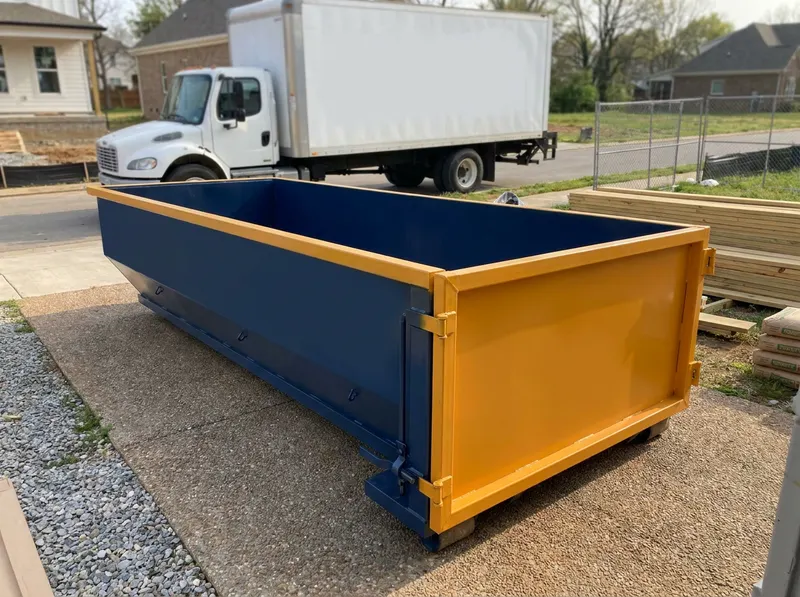
A commercial account differs from a one-off rental in one practical way: the price and the paperwork stay identical from the first drop to the fiftieth. A remodeler running three gut jobs in 12 South, Sylvan Park, and East Nashville pays the same flat tier at each address, $695 for every 20-yard container, so bids can be priced before the first wall comes down. The 10-yard holds roughly 4 pickup loads; the 20-yard about 8; the 40-yard about 16.
For reference, the EPA's guidance on construction and demolition materials treats C&D debris as its own waste stream, which is why clean loads and sorted concrete move faster.
Decision-fit runs on debris weight, not just volume. A kitchen or bath remodel in Germantown fits a 10- or 15-yard; a full roof tear-off on a two-story in Green Hills suits a 20- or 30-yard; a commercial clear-out or new-build framing haul in a Donelson or Antioch business park calls for the 40-yard. The trade-off is footprint: a 40-yard runs about 22 feet long and eats most of a lane, so a tight Gulch alley or a shared parking lot may favor two smaller swaps over one giant box.
Heavy, dense material, concrete, dirt, roofing, is better split into dedicated lower-fill loads so the container stays within legal road weight; the Tennessee Department of Transportation publishes truck weight limits that govern how full a roll-off can legally leave a site.
How the account works, in order. Step 1: set up the account by phone and list the active job sites. Step 2: a container is dropped on plywood or boards to protect driveways and lot surfaces.
Step 3: the crew loads during the build. Step 4: a swap or pickup is called in, and a fresh box is dropped if the job continues. Step 5: each haul is invoiced at its flat tier, $595 to $895, with no surprise tonnage line.
Keep the top of each container at or below the rim; an overloaded box can't be safely tarped, and FMCSA cargo securement rules require a covered, level load for highway transport.
Permits matter on public right-of-way. A container set in a private driveway in Bellevue or Hermitage needs no permit; one placed in a street or on a sidewalk in denser corridors near Vanderbilt University or Belmont University may require a Metro right-of-way permit, and Metro Nashville Public Works administers those. Crews working demolition should follow OSHA demolition standards and keep loading paths clear.
Material that counts as hazardous, paint, solvents, fuels, is barred from every container and routed through household hazardous waste channels instead; recyclable fractions can be checked against Earth911's recycling directory. For jobs chasing diversion targets, the USGBC LEED program credits sorted C&D recycling, and the Construction & Demolition Recycling Association tracks reuse markets. This is dumpster service, not junk removal, the crew that loads the debris is yours; our team delivers, swaps, and hauls the container.
Every job gets a firm, written price after an on-site visit.
Tell us about your contractor & commercial accounts job in Nashville and we'll send a clear, written quote, usually the same day.
 Haul Master Dumpster Rental